Industrial lenses differ from ordinary camera lenses. They must not only ensure image clarity but also excel in high-precision inspection, long-term stable operation, and adaptability to complex environments.
Improper selection can lead to the following problems:
Blurred image: causing misjudgment of defects or inaccurate dimensional measurements;
Wasted cost: overkill performance of expensive lenses or specifications incompatible with the application scenario;
System lag: mismatch between lens, camera, and light source parameters, affecting inspection efficiency.
Industrial lens selection is not solely based on parameters but rather on finding the optimal balance between clarity, cost, and application requirements.
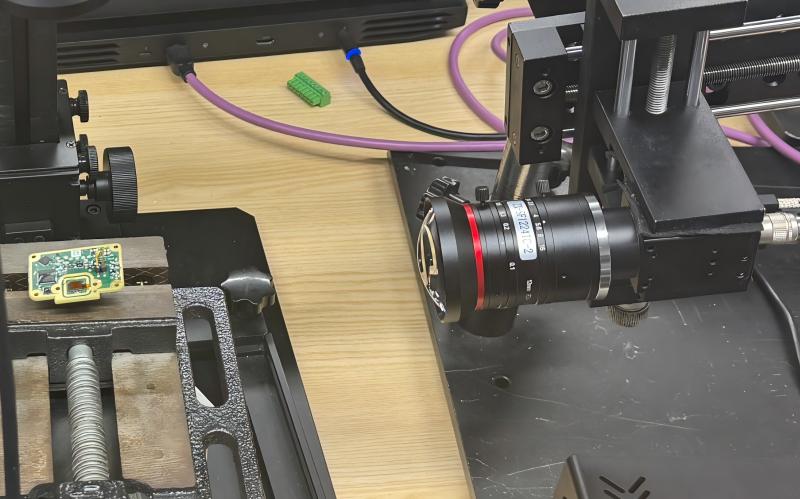
When should a telecentric lens be selected?
Telecentric lenses are called "telecentric" because their optical design ensures that the principal ray (the ray passing through the center of the aperture) remains parallel to the optical axis on the object or image side. This unique parallel optical path design gives them significant advantages in industrial inspection, precision measurement, and other fields. So how do you choose a suitable telecentric lens? Simply select the appropriate parameters based on the size of the workpiece you need to measure. Chip size and magnification are important indicators for telecentric lenses, and these parameters are explained in the technical specifications of each lens. With the same chip size, a higher magnification results in a smaller field of view and higher accuracy; some lenses have variable magnification, meaning the field of view is also variable.
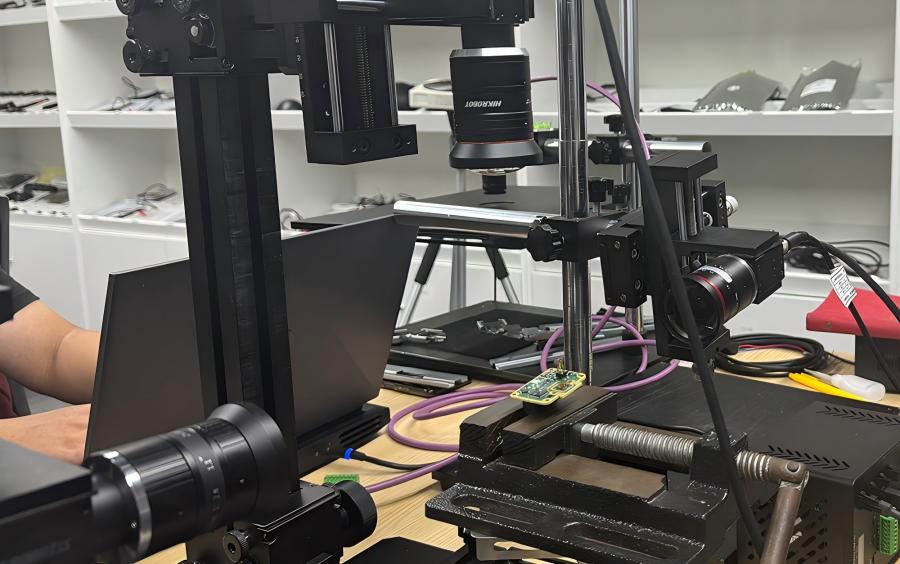
When are optical filters needed?
In industrial vision systems, the application of filters is crucial, effectively improving image quality and reducing external interference. Typically, filters are used in conjunction with lenses when the inspection environment contains complex light sources, strong reflections, or requires identification of specific wavelengths. For example, in strong light or multi-source environments, narrowband filters can be used to allow only specific wavelengths of light to pass through, thus suppressing stray light interference; in color imaging, infrared cutoff filters are often used to avoid color shift caused by infrared light; and for infrared detection or night vision applications, infrared transmittance filters are required, allowing only infrared wavelengths to pass through.
Furthermore, when excessive scene brightness leads to image overexposure, neutral density filters can be used to uniformly reduce light intensity; and in special inspection scenarios such as material identification and fluorescence detection, long-pass, short-pass, or fluorescence filters can help the camera acquire information in specific wavelengths. Filters are generally installed at the front of the lens or inside the camera, and their correct selection and use are essential for achieving accurate and stable visual inspection.
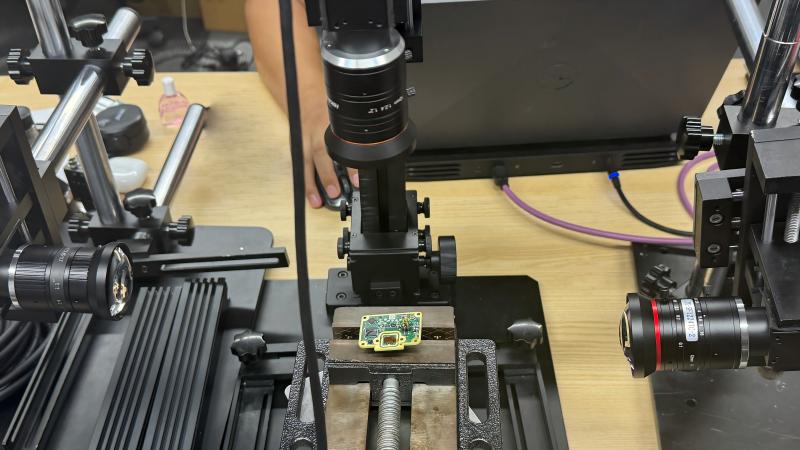
How to choose lens depth of field according to needs
In industrial vision inspection, selecting the appropriate lens depth of field is crucial for ensuring image clarity and inspection accuracy. Different inspection tasks have different depth of field requirements, which can be considered comprehensively from the following aspects:
1. Inspection Accuracy Requirements:
When the inspection task requires high accuracy, such as micro-size measurement or surface defect identification, a shallow depth of field lens is recommended. This type of lens has higher resolution and imaging detail capabilities, clearly capturing microscopic features.
If the inspection task mainly focuses on the overall features or size range of the target, such as shape inspection or assembly inspection, a large depth of field lens can be selected to achieve fast and comprehensive imaging coverage.
2. Size and Shape of the Object Being Inspected:
For larger or more complex objects, a large depth of field lens can cover a wider spatial range in a single image, reducing the number of refocusing and imaging operations.
For smaller objects or objects requiring focus on a local area, a shallow depth of field lens can highlight key areas and provide higher local clarity.
3. Stability of the Inspection Environment:
In scenarios with significant vibration on the production line or unstable positions of the object being measured, a large depth of field lens offers greater tolerance and effectively avoids image blurring caused by focus shift.
If the detection environment is stable and the target position is fixed, the high resolution advantage of a shallow depth-of-field lens can be fully utilized to achieve more accurate imaging results.
In machine vision systems, the selection of industrial lenses is a crucial factor affecting inspection accuracy and system stability. Different inspection scenarios place drastically different demands on the optical structure and performance parameters of lenses. It can be said that the choice of every detail, from lens structure to optical components, affects the final performance of the vision system. Only by scientifically matching lenses and accessories according to actual inspection needs can the performance advantages of industrial cameras be truly realized, achieving efficient and accurate visual inspection and automated control.


