With the rapid development of industrial automation and intelligent manufacturing, machine vision inspection has become an indispensable and important component of modern production lines. As the core hardware of a vision inspection system, the imaging performance of industrial cameras directly affects the accuracy and stability of inspection results. Especially in low-light environments, the ability of industrial cameras to stably output high-quality images has become one of the important indicators for measuring their overall performance.
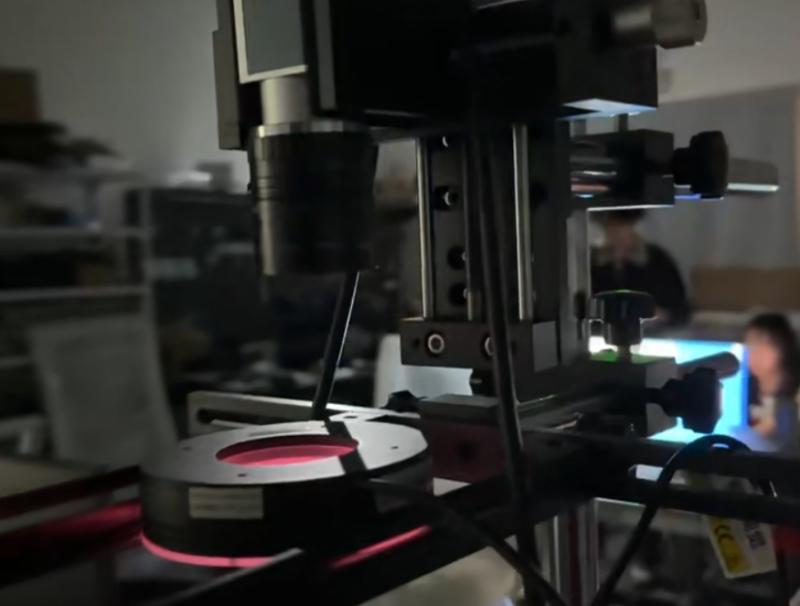
1. Low-light applications of industrial visual inspection
Industrial vision inspection applications can generally be divided into three main categories: dimensional measurement and positioning, surface defect detection, and logo detection and recognition. Dimensional measurement primarily detects the length, width, and height of workpieces, with two-dimensional dimensional inspection being the most common in practical applications. Surface defect detection focuses on areas of uneven physical or chemical properties on the surface of the object being inspected, such as scratches, pits, and spots on metal or plastic products, and insufficient or excessive solder on PCB. Logo detection is mainly used to determine the correctness, completeness, and accuracy of printed content.
In actual production environments, insufficient lighting is often a problem due to enclosed equipment structures, limited workstation space, light-absorbing materials, or energy-saving considerations. Low-light environments lead to insufficient image brightness, significantly increased noise, and loss of detail, thus placing higher demands on the imaging capabilities and stability of industrial cameras. Therefore, testing and analyzing imaging performance under low-light conditions is of great significance for the selection and application of industrial vision systems.
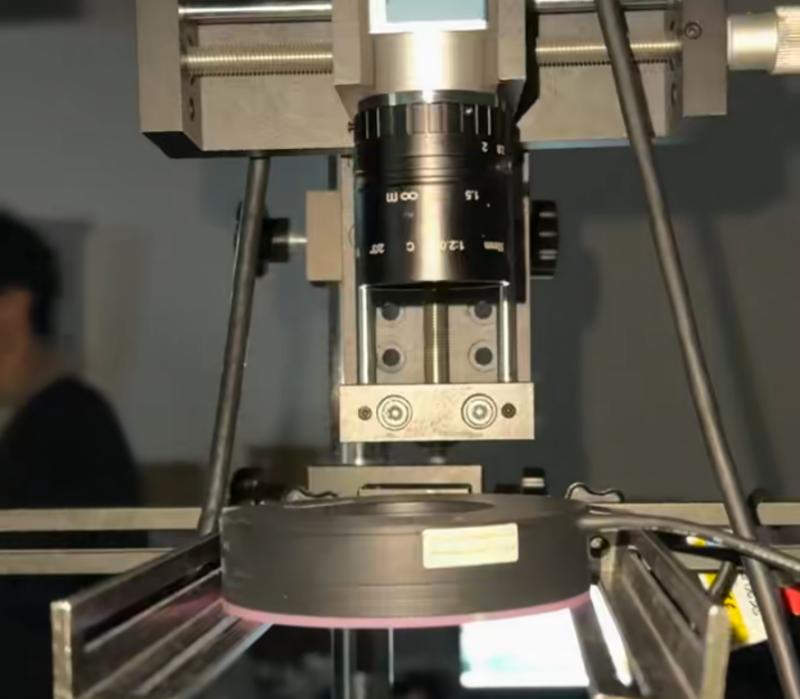
2. Composition of Industrial Vision Inspection System
A complete industrial vision inspection system typically consists of three main parts: image acquisition, image processing and analysis, and data management and human-machine interaction. From a hardware perspective, the image acquisition module mainly includes equipment such as lighting sources, industrial cameras, industrial lenses, and image acquisition cards. From a software perspective, the image processing and analysis module mainly comprises image preprocessing algorithms and detection algorithms, used to enhance target features and complete dimensional measurements or defect identification. The data management and human-machine interaction module sorts products, issues alarms, or records based on the inspection results.
In low-light inspection applications, the importance of the image acquisition module is particularly prominent. The camera's ability to capture light signals, its noise control level, and its dynamic range performance directly affect the processing effect of subsequent algorithms and even determine whether the entire vision system can operate stably.
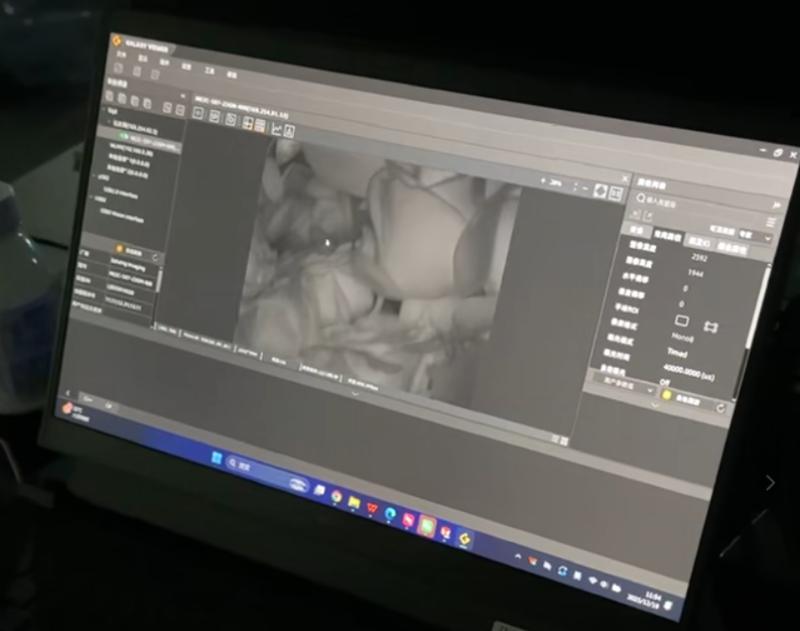
3. Low-light imaging test camera parameters
In low-light imaging testing of industrial cameras, the following core parameters need to be focused on, as they collectively determine the camera's actual imaging performance under complex lighting conditions.
1. Resolution and Imaging Detail
Resolution is one of the most fundamental performance indicators of an industrial camera, determined by the number of pixels in the image sensor. Area scan cameras typically express resolution in terms of horizontal and vertical pixel counts, such as 1920×1080; in practical applications, it is also often expressed as 1K, 2K, 4K, etc.
Within the same field of view, higher resolution allows the camera to present richer detail information. In low-light environments, high-resolution cameras help retain more effective image information, providing a foundation for subsequent defect detection and dimensional measurement.
2. Acquisition Speed and Exposure Control
Camera acquisition speed is usually expressed in frame rate (fps) or line frequency (kHz). For moving target detection applications, the camera must have sufficient acquisition speed to avoid image blurring or information loss.
In low-light environments, the appropriate setting of exposure time is particularly critical. Longer exposure times help improve image brightness, but may also introduce motion blur. Therefore, a camera's shutter control capability and high-speed acquisition performance are crucial for achieving clear imaging in low light.
3. Noise Level
Noise is one of the most prominent influencing factors in low-light imaging. According to the EMVA1288 standard, camera noise mainly includes signal-related shot noise and inherent noise introduced by sensor readout circuits and signal processing circuits. Furthermore, quantization noise is generated during the digitization process.
Under low-light conditions, noise control capability directly affects image usability. Industrial cameras with low-noise characteristics can maintain a higher signal-to-noise ratio in low-light environments, making target features clearer and facilitating stable detection.
4. Pixel Depth and Grayscale Levels
Pixel depth refers to the number of bits used to represent the grayscale level of the camera's output image, commonly 8-bit, 10-bit, 12-bit, or even higher. Higher pixel depth allows for a richer range of grayscale levels, helping to distinguish subtle differences in brightness.
In low-light applications, higher pixel depth improves grayscale performance, but also places higher demands on data transmission speed and system integration. Therefore, a comprehensive trade-off must be made between detection accuracy and system performance in practical applications.
5. Spectral Response and Light Source Matching Capability
The spectral response of an industrial camera determines its sensitivity to different wavelengths of light. Based on their response range, cameras can be categorized as visible light cameras, infrared cameras, and ultraviolet cameras. In low-light detection, appropriately matching the camera's spectral response characteristics with the ambient light source helps maximize the acquisition of effective signals and improve overall imaging quality.
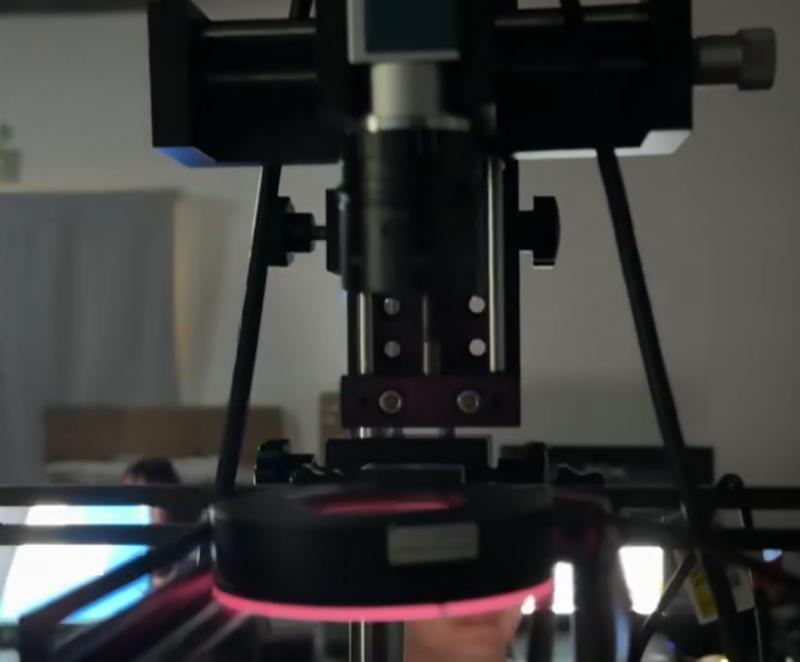
4. The practical significance of low-light imaging testing
By conducting imaging tests on industrial cameras in low-light environments, their detail reproduction capabilities, noise control, and imaging stability under low-light conditions can be systematically evaluated. This not only helps optimize camera selection but also reduces reliance on high-brightness light sources in practical applications, thereby decreasing system energy consumption and structural complexity.
In scenarios such as PCB solder joint inspection, electronic component inspection, and precision parts appearance inspection, industrial cameras with good low-light imaging capabilities can maintain stable output in complex environments, providing a reliable data foundation for automated inspection systems.
Imaging performance in low-light environments has become a crucial direction for the development of industrial camera technology. Through scientific testing methods and reasonable parameter analysis, the performance of industrial cameras in practical applications can be more comprehensively evaluated. In the future, with the continuous improvement of image sensor technology and signal processing capabilities, industrial cameras will demonstrate greater application potential in the field of low-light inspection. Zhixiang Shijue will continue to focus on practical application needs, testing and optimizing industrial cameras and vision solutions to provide customers with more stable and efficient machine vision inspection support.


