Machine vision systems are technological systems that use machines to replace human eyes in performing measurement, recognition, and judgment tasks, and are an important branch of computer science. These systems integrate multiple disciplines, including optics, mechanics, electronics, and computer hardware and software, and involve various fields such as image processing, pattern recognition, artificial intelligence, signal processing, and opto-mechatronics.
With the rapid development of key technologies such as image processing and pattern recognition, the depth and breadth of machine vision applications have continuously expanded.
In recent years, driven by intelligent manufacturing and industrial automation, machine vision technology is constantly evolving towards higher precision and greater intelligence. Compared to traditional two-dimensional image processing, research and applications in the field of industrial vision are gradually shifting towards 3D vision inspection technology, and have achieved large-scale applications in scenarios such as weld inspection, parts sorting, and metal sheet measurement.
It can be said that machine vision inspection is moving from "two-dimensional recognition" to "three-dimensional perception."
From a system composition perspective, a complete machine vision system typically includes a lighting system, industrial lenses, a camera system, and an image processing system. In practical applications, it is necessary to consider key factors such as system operating speed and image processing efficiency, camera type (color or monochrome), whether the detection target is size measurement or defect identification, the required field of view, resolution, and imaging contrast, in order to build a stable and efficient visual inspection solution.
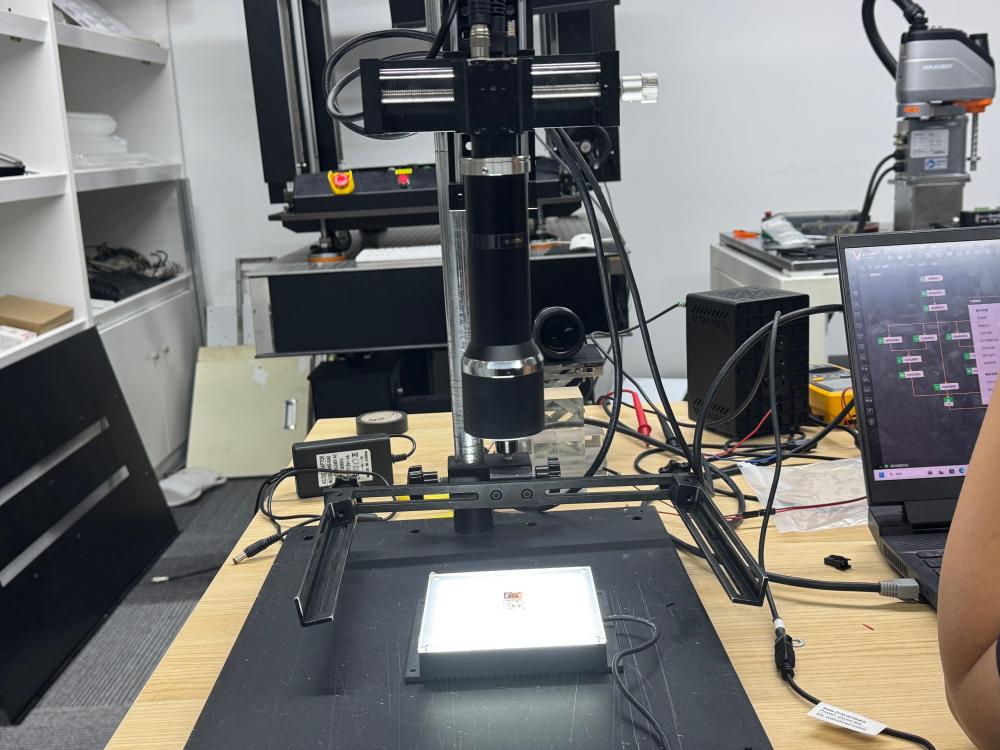
The structure of the visual system
Hardware System Design
The hardware components of a machine vision system mainly consist of industrial lenses, industrial cameras, image acquisition cards, input/output units, and control devices.
The overall performance of the vision system depends not only on the camera's pixel count and the quality of the hardware itself, but more importantly, on the rational matching and coordinated operation of each hardware module. For example, the matching of the lens and camera resolution, and the compatibility of the acquisition card and data interface, will directly affect the system's image quality and operational stability.
Therefore, a high-performance vision system requires comprehensive consideration of hardware selection, system structure, and application scenarios.
Software System Design
The software design of the vision system is one of the core aspects of the entire system and involves a high degree of technical complexity. During the software development process, it is necessary to focus not only on optimizing program structure and operational efficiency, but also on the accuracy and feasibility of the algorithms, and their stable performance in real-world scenarios.
After the software system is completed, its robustness must be thoroughly tested and continuously optimized to ensure that the system maintains stable and reliable detection performance even in complex external environments such as varying lighting conditions, background interference, and target variations.
In robotic vision applications, the system typically consists of two main parts: the image acquisition module and the vision processing module.
The image acquisition module includes the lighting system, visual sensor, analog-to-digital converter (A/D), and frame memory, which are used to acquire two-dimensional image information from the environment.
The robotic vision system obtains image data through the visual sensor, which is then analyzed, recognized, and interpreted by the vision processor. The processing results are converted into executable control commands, enabling the robot to accurately identify target objects and determine their spatial positions, thereby completing tasks such as positioning, grasping, and assembly.
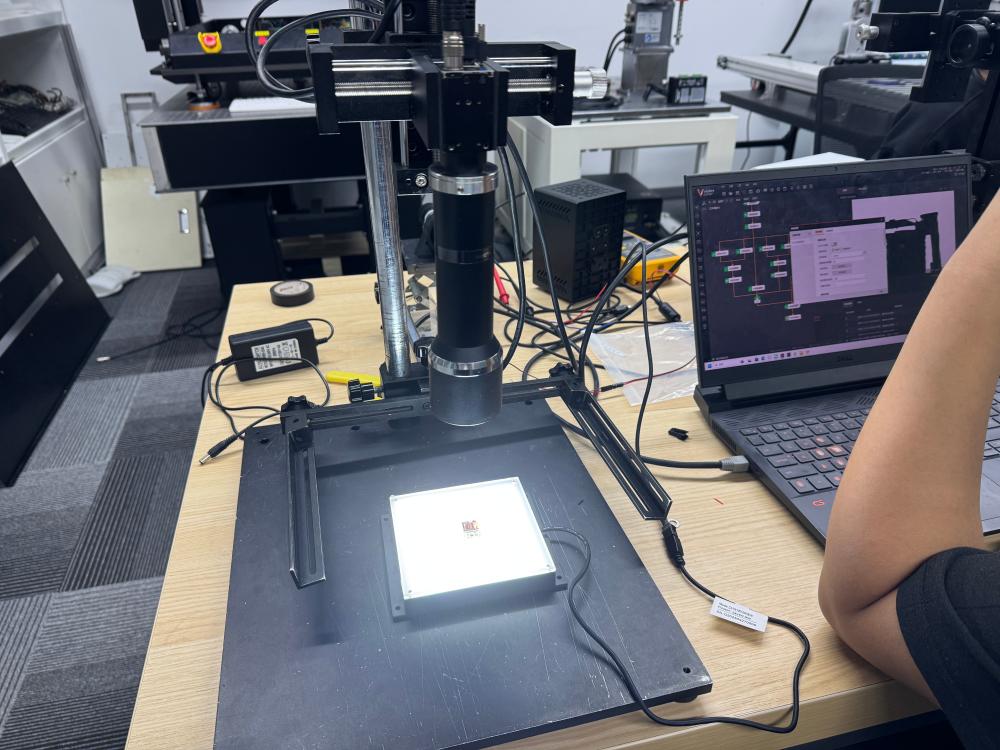
High-precision non-contact measurement solution
Spectral confocal sensors operate based on the principle of white light dispersion, using a special optical system to focus monochromatic light of different wavelengths at different focal positions. The system accurately calculates the distance between the object and the sensor based on the wavelength information of the light reflected from the object's surface.
This measurement method is unaffected by the intensity of reflected light and is applicable to almost all materials, enabling high-precision, high-stability non-contact measurement. A single scan can acquire the complete or partial 3D topography of the object's surface, offering significant advantages such as high accuracy, high speed, and strong stability.
Compared to traditional laser detection methods, spectral confocal technology performs particularly well in the detection of transparent objects, highly reflective surfaces, and strongly light-absorbing materials. It is widely used in online inspection scenarios in industries such as 3C electronics, semiconductors, lithium-ion batteries, and precision hardware.
Industrial-grade 3D measurement solutions
Laser triangulation is a mature 3D measurement method widely used in industries such as timber, rubber, tires, automotive parts, metals, and cast iron, and is also suitable for large-scale inspection scenarios such as road surfaces.
This technology projects structured laser light onto the object's surface, and a camera captures the laser line profile to calculate height information, thereby generating 3D point cloud data. In practical applications, the object being measured typically moves beneath the sensor, and by continuously acquiring and stitching together multiple profile sections, a complete three-dimensional image is ultimately formed.
The mounting angle between the laser and the camera has a significant impact on measurement accuracy and system stability. Increasing the angle helps improve height resolution, while decreasing the angle improves overall stability. Combined with mature software algorithms, this technology can achieve efficient and reliable 3D data processing and analysis.
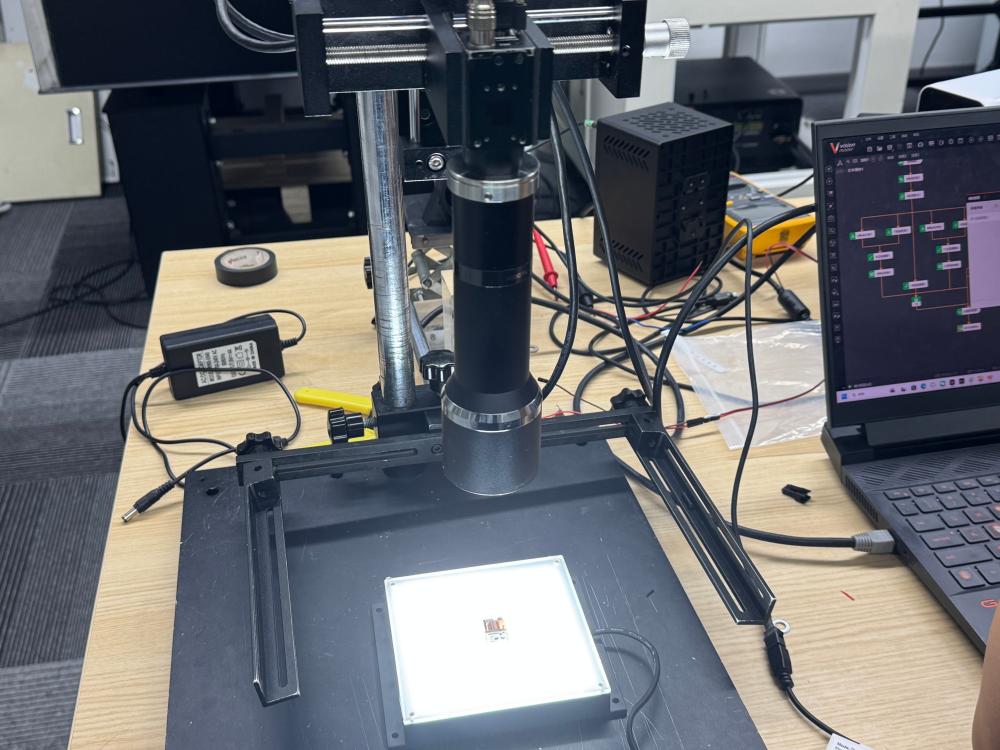
3D Stereoscopic Vision Camera Solution
3D stereoscopic vision cameras are based on the binocular vision principle similar to the human eye. They acquire images from different perspectives using two cameras and utilize disparity information to calculate the depth data of objects.
In practical industrial applications, random texture projection is often combined with this technology to enhance the feature information of the measured object's surface, thereby improving image matching accuracy. This technology has been widely applied in scenarios such as robot guidance, assembly positioning, and system debugging, demonstrating excellent adaptability in dynamic detection and flexible manufacturing environments.
Fast spatial positioning
ToF (Time-of-Flight) cameras calculate the distance to a target by emitting infrared light pulses and measuring the time it takes for the reflected light to return to the sensor, similar to the principle of radar ranging.
Early ToF technology was limited by resolution and measurement accuracy, making it difficult to meet industrial-grade inspection requirements. With technological advancements, megapixel ToF cameras have emerged, leading to their increasing adoption in applications such as 3D object detection, robotic handling, and pallet loading and unloading.
It's important to note that ToF technology is more suitable for object recognition and spatial positioning, and not for high-precision dimensional measurement applications.
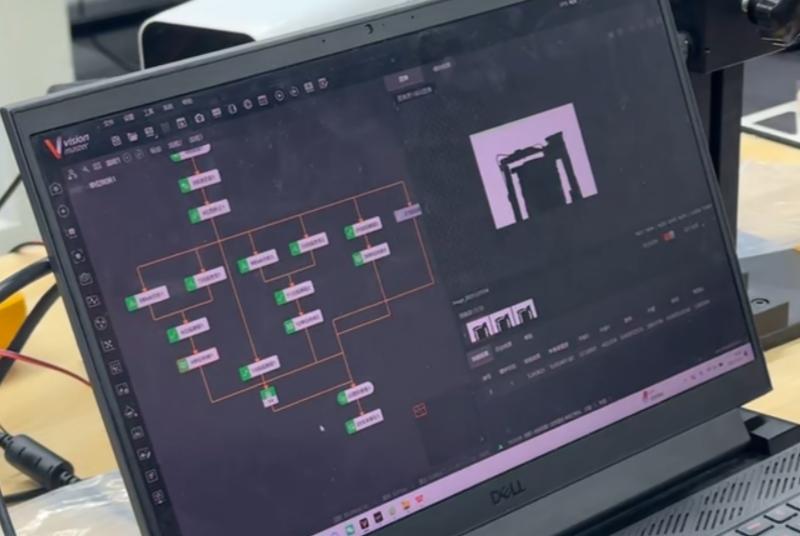
The role of software in 3D vision
In 3D machine vision systems, image processing and analysis software is equivalent to the system's "brain."
Traditional vision inspection largely relies on rule-based programming, completing detection tasks through feature matching and threshold judgment; however, as application scenarios become increasingly complex, deep learning and artificial neural networks (ANNs) are gradually becoming the mainstream solutions.
Artificial neural networks consist of a large number of interconnected "neurons," whose connection weights can be continuously adjusted based on training data, thereby achieving autonomous learning and feature extraction. Under the deep learning framework, the system does not require manual definition of complex image features; it only needs to input raw image data to automatically complete feature extraction, classification, and judgment, demonstrating stronger adaptability and robustness in complex industrial environments.
With the continuous maturation of 3D imaging technology, point cloud processing algorithms, and artificial intelligence, machine vision inspection is developing towards higher precision, greater intelligence, and broader application scenarios.
Zhixiang Shijue will continue to expand the boundaries of industrial inspection by combining 3D machine vision with deep learning, providing more reliable technical support for intelligent manufacturing and automation upgrades. The machine vision industry is full of expectations for the future, and we look forward to seeing what unfolds.


