As industrial manufacturing evolves towards higher precision and consistency, the perspective error and magnification variation issues of traditional non-telecentric lenses in large field-of-view, high-precision measurement scenarios are becoming increasingly apparent. To meet the application demands of large workpieces, whole-plate inspection, and high-precision dimensional measurement, ultra-large telecentric lenses have emerged, becoming a crucial optical component in high-end machine vision systems.
Compared to ordinary industrial lenses, ultra-large telecentric lenses employ a larger aperture and more complex lens combinations in their structural design, resulting in a relatively larger overall size. However, this design is not simply about pursuing size, but rather about achieving lower distortion, more stable constant magnification, and a larger effective field of view, fundamentally ensuring the accuracy and consistency of measurement results.
In practical applications, ultra-large telecentric lenses effectively eliminate perspective errors; even if the measured object changes position within a certain height range, its image size remains largely unchanged. This characteristic makes them particularly outstanding in scenarios such as large workpiece measurement, precision component dimensional inspection, and simultaneous multi-target inspection.
Currently, ultra-large telecentric lenses are widely used in semiconductor packaging inspection, 3C electronic circuit board inspection, precision hardware measurement, and new energy battery and electrode inspection. With their stable imaging performance and extremely high measurement repeatability, ultra-large telecentric lenses provide a reliable data foundation for machine vision systems.
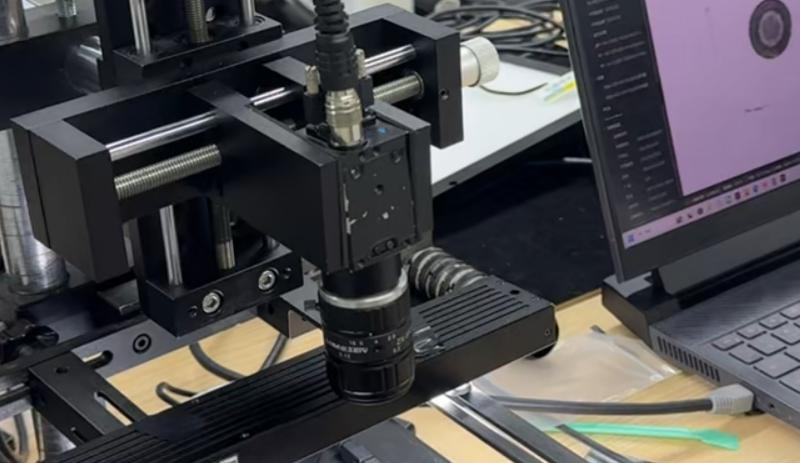
Telecentric lenses vs. conventional lenses
From an optical structure perspective, industrial lenses can be divided into non-telecentric lenses and telecentric lenses. Telecentric lenses, in turn, are classified into object-side telecentric lenses, image-side telecentric lenses, and double telecentric lenses, each with distinct characteristics in terms of imaging accuracy and application scenarios.
In an optical system, the image of the aperture stop in object space is called the entrance pupil, and its image in image space is called the exit pupil. The entrance pupil, aperture stop, and exit pupil are mutually conjugate. The ray passing through the center of the aperture stop is called the principal ray; it passes through the centers of both the entrance pupil and the exit pupil, representing the central direction of the imaging beam.
In telecentric optical design, the principal ray remains parallel to the optical axis in either the object space or the image space, effectively eliminating perspective distortion. This is the key difference between telecentric lenses and ordinary industrial lenses.
With the increasing demands for precision and efficiency in industrial inspection, ultra-large telecentric lenses are gradually becoming a core optical configuration in high-end vision inspection solutions, providing more robust technical support for intelligent manufacturing and automated production.

Telecentric lens design
Telecentricity Design
Telecentric optical systems have wide applications in high-precision visual measurement. The level of telecentricity directly determines the consistency of image magnification at different depths of field. During the design process, we control the telecentricity index to the 0.01% level, effectively ensuring that the difference in imaging magnification at different depths within the depth of field is negligible, thus significantly improving the stability and reliability of the measurement results. This design provides strong support for the application of double telecentric lenses in high-precision depth measurement, further expanding their application in the field of precision visual measurement.
Refractive Optical Path Design
Due to the limitations of the optical path structure, traditional telecentric lenses are usually large in size and cylindrical in shape, which brings certain difficulties to equipment installation and fixation, especially limiting their application in space-constrained automated production lines. To address this problem, we innovatively adopted a refractive optical path structure. Through multiple optical path turns, we significantly reduced the overall volume of the lens while ensuring imaging performance, reducing the total length of the lens by more than half. At the same time, combined with a more convenient installation and positioning method, it effectively improved the adaptability of telecentric lenses in automated production lines, allowing double telecentric products to be more closely integrated into actual production scenarios.
Centering Optical Path Structure Design
Traditional telecentric lenses mostly use a threaded retaining ring structure, composed of multiple segments. Although this is convenient for production and assembly, it can easily affect the overall coaxiality of the lens, thereby affecting the imaging quality. To achieve a balance between assembly efficiency and imaging performance, we introduced a centering optical path structure in the product design phase. Through the centering mechanism, we ensure the coaxiality consistency between each structural component and optimized the assembly process. This design effectively improves the imaging quality and product consistency of the lens, providing reliable assurance for quality stability and yield rate in mass production.
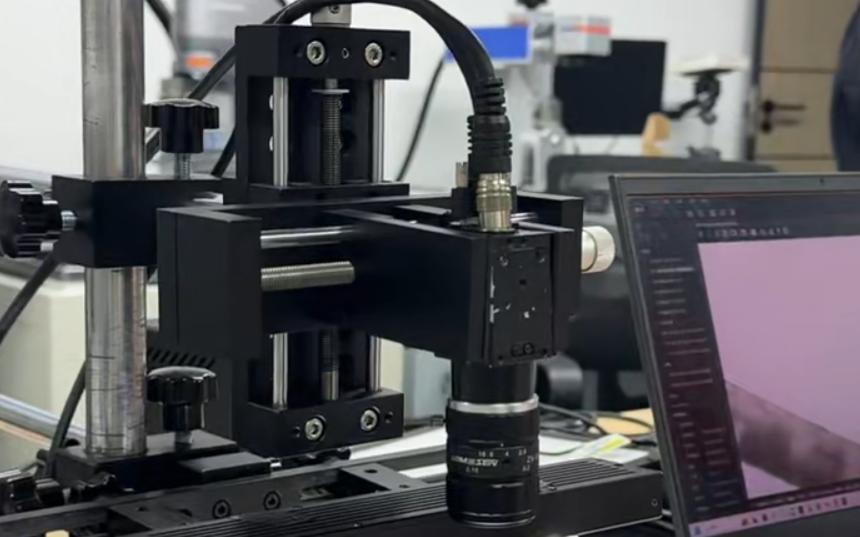
How to choose industrial lenses
In precision vision measurement applications, ordinary industrial lenses often face certain limitations in practical use, mainly in the following aspects:
The imaging magnification is difficult to maintain consistently when the measured object is at different measurement planes;
Lens distortion is relatively large, affecting the accuracy of dimensional measurement;
There is a significant parallax phenomenon, meaning that changes in object distance lead to changes in imaging magnification;
The lens resolution is limited, making it difficult to meet the needs of high-precision detection;
Due to the geometric characteristics of the visual light source, there is a certain degree of uncertainty in the image edge position.
To address these problems, telecentric lenses can achieve effective improvement through their unique optical structure. Because the principal rays of imaging are approximately parallel, telecentric lenses can maintain a stable and consistent magnification within a specific working distance range, significantly reducing measurement errors caused by height changes, and fundamentally eliminating the influence of perspective and parallax on the interpretation results.
At the same time, telecentric lenses usually have superior imaging quality and lower distortion performance. When combined with high-resolution sensors and measurement software, they can achieve high repeatability and consistency in precision dimensional measurement. For this reason, telecentric lenses have become an important optical component in high-precision measurement and metrology applications, and are widely used in machine vision systems that require high measurement accuracy and stability.
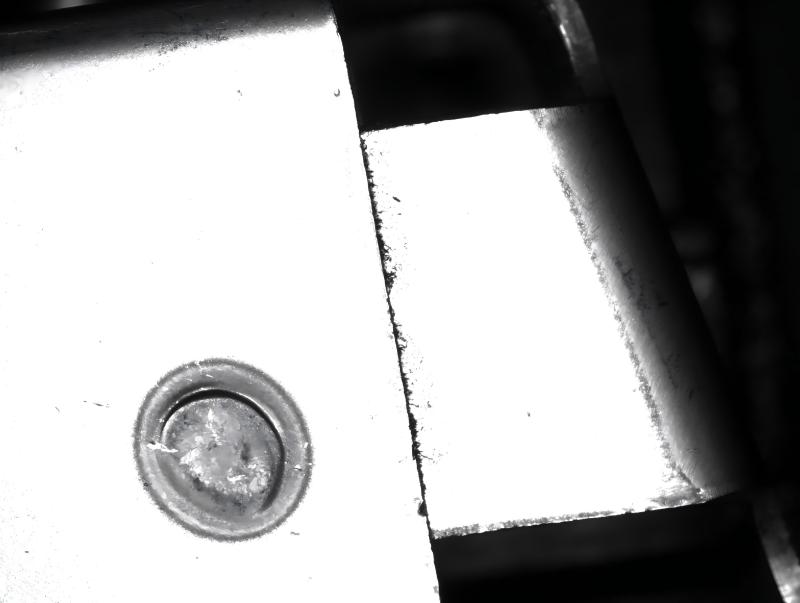
Lens Selection and Application Examples
A common saying is: machine vision, in essence, uses machines to replace the human eye for measurement and judgment. A complete machine vision system typically consists of an industrial camera, lens, light source, image processing system, and actuator. The industrial lens, as the crucial bridge connecting the physical world to image data, directly impacts the system's image quality and detection accuracy. Therefore, proper lens selection is a core aspect of visual system design that cannot be overlooked.
In a machine vision system, image quality is the foundation of all analysis and judgment, and the lens is the key factor determining image clarity, distortion control, and field of view. A suitable lens can accurately reproduce the true size and detailed features of the object being measured, providing stable and reliable data input for subsequent algorithms. Conversely, improper lens selection can lead to problems such as insufficient resolution, excessive distortion, and mismatched depth of field, which not only increases the difficulty of image processing but also directly affects the accuracy and consistency of the detection results. Therefore, scientific and rational lens selection at the initial stage of system design is an important prerequisite for ensuring the performance of the machine vision system.
With the widespread application of machine vision technology in industries such as electronics manufacturing, automotive industry, packaging and printing, food processing, and medical testing, the requirements for lenses in different scenarios are becoming increasingly diverse. The objects being measured vary significantly in size, structure, accuracy requirements, and installation space, making lens selection more than just simple parameter matching; it requires a comprehensive evaluation based on the specific application. Next, we will explore the key considerations and practical methods for industrial lens selection, starting with common lens types and their characteristics, and combining them with practical application cases.
In summary, the proper selection of industrial lenses is fundamental to the stable operation and high-precision detection of machine vision systems. Telecentric lenses, with their unique optical structure and imaging characteristics, demonstrate irreplaceable advantages in precision measurement and high-consistency inspection. From core designs such as high telecentricity and centered optical paths, to imaging and measurement tests and verification conducted under actual working conditions, telecentric lenses not only possess theoretical technical advantages but also exhibit stable and reliable measurement performance in practical applications. As industrial inspection demands for accuracy, efficiency, and consistency continue to increase, telecentric lenses are gradually becoming an important component of high-end machine vision systems, providing a more robust optical foundation for intelligent manufacturing and automated production.


