Home » Blog » Industrial lenses vs. conventional lenses: What are the key differences in imaging accuracy?

Industrial lenses vs. conventional lenses: What are the key differences in imaging accuracy?

Views: 0     Author: Site Editor     Publish Time: 2025-12-11      Origin: Site

Inquire

facebook sharing button
twitter sharing button
line sharing button
wechat sharing button
linkedin sharing button
pinterest sharing button
whatsapp sharing button
kakao sharing button
sharethis sharing button

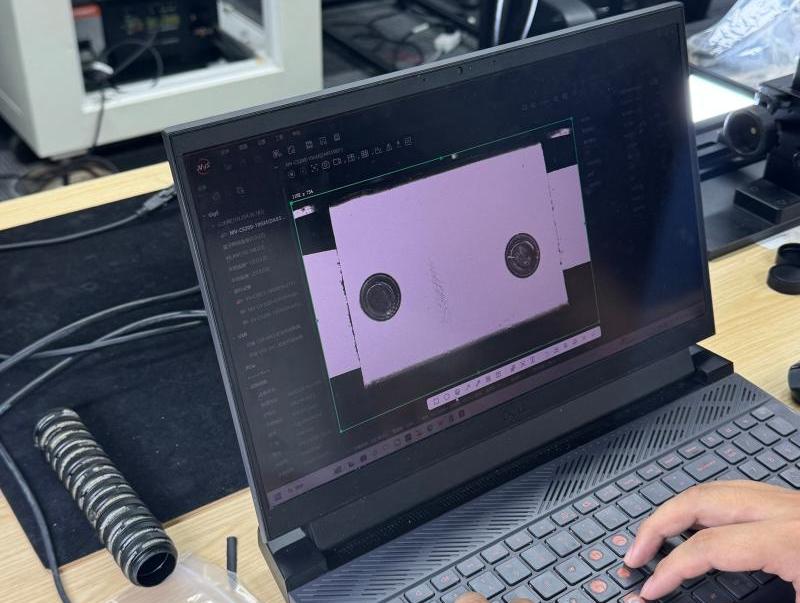
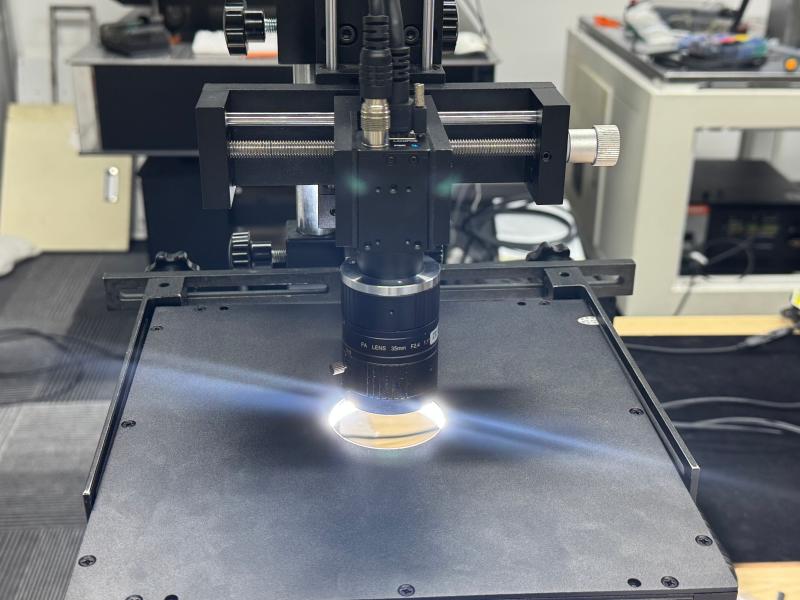
In today's era of rapid information and automation development, machine vision has become an indispensable key technology in industrial production. As the "eyes" of the vision system, the lens's performance directly determines image quality and affects the final accuracy of tasks such as detection, measurement, and recognition. Although industrial lenses and the lenses in our everyday mobile phones and cameras belong to the same optical system, they differ fundamentally in design philosophy, application objectives, structural performance, and other aspects.

The following analysis delves into the core differences between industrial lenses and general lenses from multiple perspectives, giving you a clearer understanding of the importance of industrial lenses in modern manufacturing.

Design Purpose and Application Scenarios:

Industrial Lenses:

Primarily serving machine vision systems, its mission is to provide realistic, accurate, and quantifiable image data. Whether for dimensional measurement, position recognition, defect detection, or geometric analysis, industrial lenses must ensure high consistency and stability of imaging to meet the stringent requirements of industrial production lines.

Standard lens:

Designed for consumer applications such as photography and video shooting. The design prioritizes the overall visual experience, emphasizing color, atmosphere, and visual aesthetics. It relies heavily on post-processing algorithms for image optimization to enhance the viewing experience for the human eye.

Lens optical performance

Optical performance:

To ensure the reliability of measurement and inspection results, industrial lenses typically employ high-specification optical glass and complex lens group structures, focusing on optimizing the following aspects:

Extremely low distortion: Industrial lenses often have a distortion rate of less than 1%, resulting in virtually no image distortion when used for rigorous measurements.

High consistency: Sharpness must remain consistent from the center to the edges.

Further aberrations: Strict control over chromatic aberration, spherical aberration, and coma ensures accurate and realistic imaging.

General lenses allow for moderate distortion and edge image quality degradation because the subject is often centered in the frame and can be compensated for through algorithms. Therefore, their optical structure prioritizes "atmosphere" rather than measurement-grade precision.

Focusing method:

Industrial lenses: Manually adjustable for precise focus, with the focus locked via screws or locking rings to prevent focus shift due to vibrations during production.

General lenses: Designed for various shooting scenarios, offering fast and convenient autofocus; however, they may introduce unnecessary uncertainty for industrial inspection.

Industrial lens imaging accuracy

Mechanical structure and durability:

Industrial lenses: Industrial lenses typically employ an all-metal construction, offering enhanced adaptability to industrial environments:

Resistant to high and low temperatures

Resistant to oil and dust

Resistant to vibration and shock

Optional dustproof, splashproof, or even IP-rated protection

Can incorporate locking mechanisms to prevent aperture and focus shifts

General lenses: Mostly made of lightweight engineering plastics, prioritizing portability and aesthetics. Sealing performance is generally limited, and they are less designed for extreme environments. They prioritize lightweight, portability, and ease of use, suitable for shooting in normal conditions.

Industrial lens focusing methods

Sharpness and distortion requirements:

Industrial lenses: These require high overall image resolution, with distortion rates typically below 1% to meet the demands of high-precision operations.

General lenses: Their design tolerance for image distortion/ghosting is generally between 2% and 3%, which does not affect everyday viewing.

Application environment:

Industrial lenses: Whether on high-speed production lines, outdoor monitoring, near high-temperature furnaces, or in low-light, high-vibration environments, industrial lenses can be adapted through customized structures.

General lenses: More suitable for shooting in ordinary living environments.

With the widespread adoption of automation and intelligent manufacturing, industrial lenses have become the most fundamental yet crucial component of machine vision systems. They not only affect inspection accuracy but also product yield, production efficiency, and enterprise competitiveness.

Compared to ordinary lenses that prioritize aesthetically pleasing images, industrial lenses focus on "realistic imaging," "precision measurement," and "long-term stability," serving as the core guarantee for reliable, efficient, and accurate visual inspection in industrial production.


Subscribe to our newsletter
Promotions, new products and sales, straight to your inbox

Quick links

Product classification

Contact information

Mail: anna@zx-vision.com
Landline: 0755-86967765
Fax: +86-0755-86541875
Mobile: +86-13316429834
WeChat: +86-13316429834
Copyright © 2024 Shenzhen Zhixiang Shijue Technology Co., Ltd. | Sitemap | privacy policy