As machine vision applications become increasingly prevalent in precision measurement, dimensional inspection, and high-consistency testing, telecentric lenses are gradually becoming a core optical component in high-end vision inspection systems due to their advantages of low distortion, constant magnification, and elimination of perspective errors. However, with the variety of telecentric lenses available with different types and parameter configurations, scientifically selecting the right lens based on actual needs has become a key concern for many users.
Types of telecentric lenses and selection considerations
Based on the definition of telecentricity, Telecentric lenses are mainly divided into three categories: object-side telecentric lenses, image-side telecentric lenses, and double telecentric lenses. Object-side and image-side telecentric lenses correspond to the entrance pupil and exit pupil being located at infinity, respectively, while double telecentric lenses possess both object-side and image-side telecentric characteristics and are most widely used in high-precision measurement applications.
Therefore, the key to selecting a telecentric lens lies in clearly defining the application requirements and precisely matching those requirements to the lens type and parameters, rather than simply pursuing "telecentricity" itself.
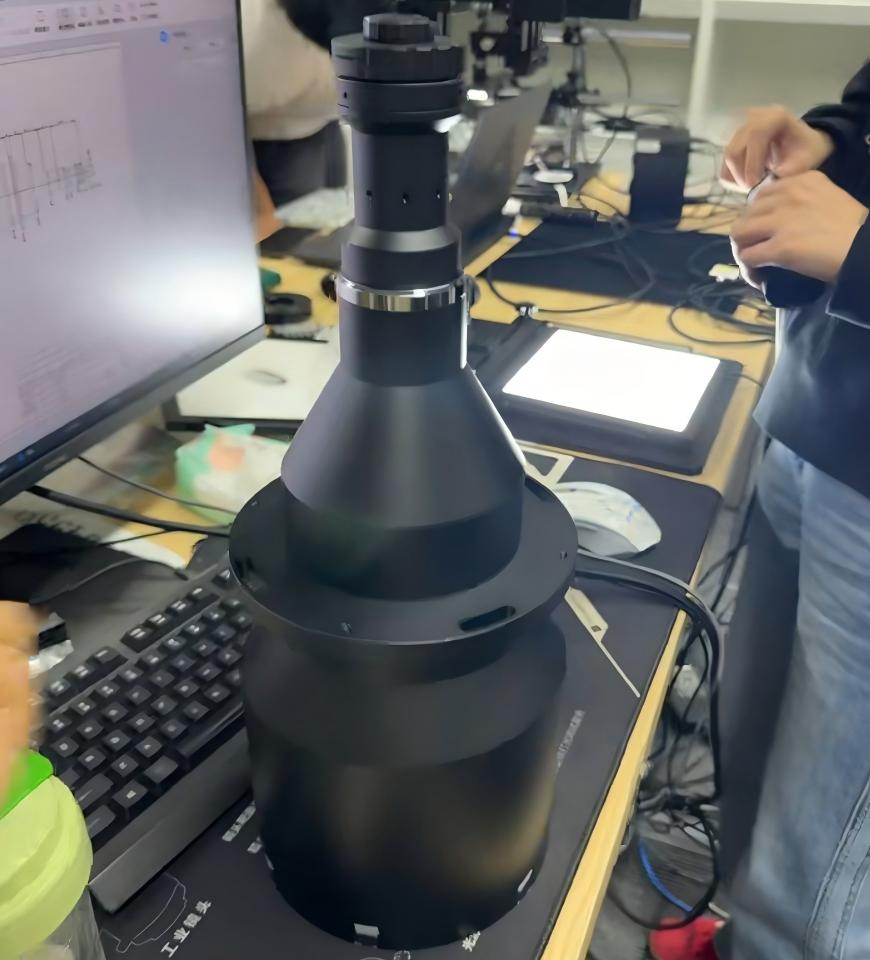
When is it necessary to choose a telecentric lens?
Based on the principles of telecentric optics and its advantages in practical applications, telecentric lenses are often the superior choice when the object or conditions being inspected meet the following criteria:
The object being measured has a certain thickness, and its height or thickness needs to be measured;
The targets being measured are not located on the same measurement plane;
There is uncertainty in the working distance between the object and the lens;
Targets with apertures or distinct three-dimensional structures need to be inspected;
High demands are placed on imaging distortion and brightness uniformity;
Defects can only be reliably identified under parallel illumination conditions.
In the above scenarios, ordinary industrial lenses are prone to introducing measurement errors due to perspective effects and magnification changes, while telecentric lenses can effectively eliminate these effects.
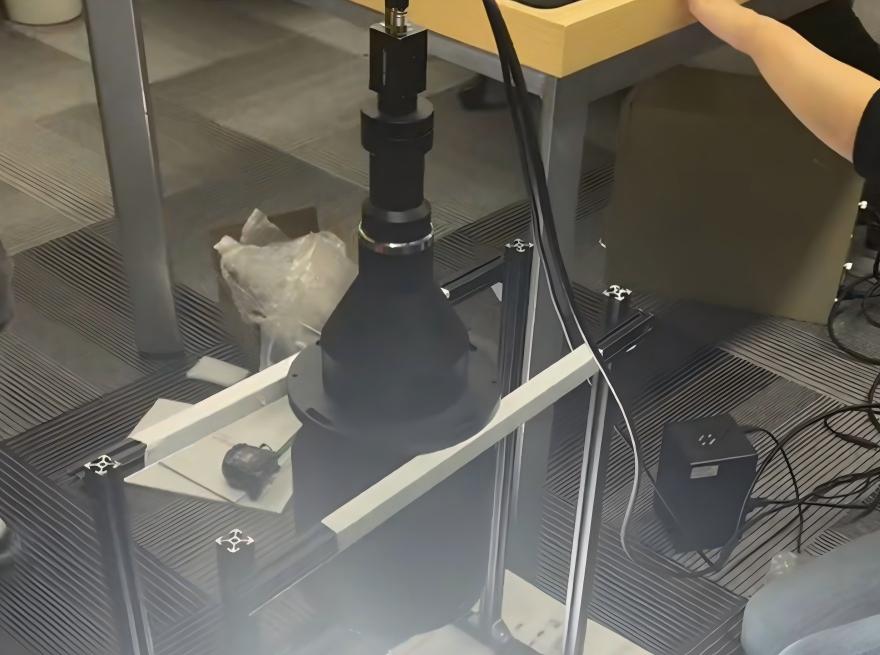
Analysis of key parameters for selecting telecentric lenses.
After determining the need for a telecentric lens, the following core parameters should be carefully considered to ensure a perfect match between the lens, camera, and application scenario:
1. Object-side dimensions (field of view)
The object-side dimensions determine the shooting range the lens can cover and should be selected appropriately based on the actual size of the object being measured.
2. Image-side dimensions (camera sensor size)
The image-side dimensions must match the size of the camera's CCD/CMOS chip. Larger image planes in telecentric lenses generally result in higher costs; if the lens image plane is larger than the diagonal of the chip, it will lead to wasted cost; if it is smaller than the diagonal of the chip, it may cause vignetting or dark corners.
3. Working distance
This is the distance between the front of the lens and the object being measured. This parameter directly affects the system's mounting structure and overall layout.
4. Resolution and pixel size
The lens resolution must meet the camera's pixel size requirements; otherwise, even with a high-resolution camera, it will not be possible to obtain accurate and effective detailed information.
5. Depth of Field Requirements
The depth of field of a telecentric lens is closely related to its magnification; the higher the magnification, the smaller the depth of field. When selecting a lens, a reasonable balance must be struck between measurement accuracy and usable depth of field.
6. Interface Type
Telecentric lenses typically use standard industrial interfaces such as C-mount, F-mount, M42, M58, etc. The interface type determines not only the physical connection method but also the standard flange distance matching. Cameras with sensor sizes of 1.2 inches and below generally use C-mount interfaces.
7. Magnification
Optical magnification can be calculated using the formula "chip size / actual field of view size". Based on the size of the object being measured and the required resolution, select a suitable objective lens and camera combination to determine the appropriate magnification. It is also important to consider the impact of magnification changes on the depth of field.
8. Distortion Control Capability
High-quality telecentric lenses typically control distortion to less than 0.1% through rigorous optical design and manufacturing processes, even achieving nearly distortion-free imaging, providing reliable assurance for high-precision measurements.
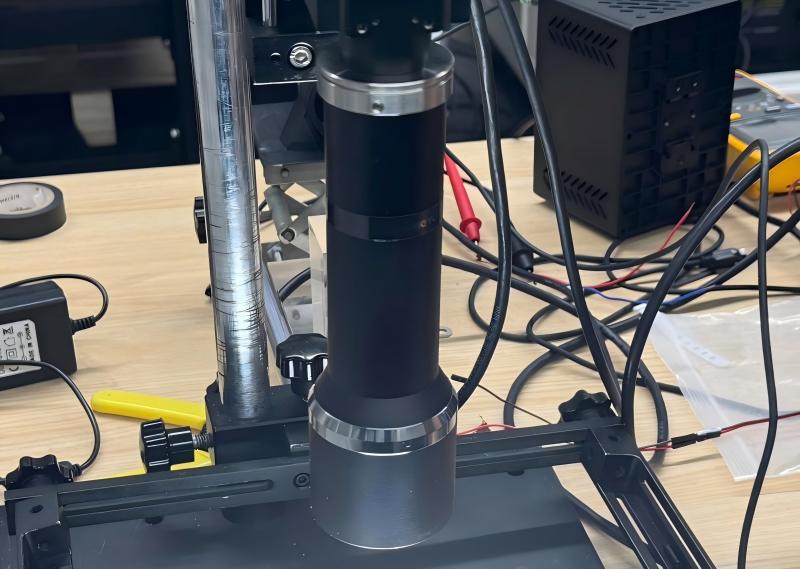
Application scenario: Telecentric lenses
Thanks to their stable and precise imaging capabilities, telecentric lenses play a crucial role in several high-end industries:
Precision dimensional measurement
Such as measuring mobile phone components, precision bearings, and connector pin spacing, relying on low distortion and parallax-free imaging.
Surface defect detection
Detecting LCD screen defects, glass scratches, and metal surface pits, relying on high resolution and uniform illumination.
Automated positioning and guidance
Robot gripping of chips and SMT placement positioning require extremely high depth of field and imaging stability.
Semiconductor and electronics manufacturing
Wafer alignment, BGA solder ball inspection, and PCB through-hole quality inspection typically require high magnification and near-infrared imaging capabilities.
Biomedical and scientific research
Applications such as microfluidic chip analysis and tablet sorting rely on precise imaging without perspective distortion.
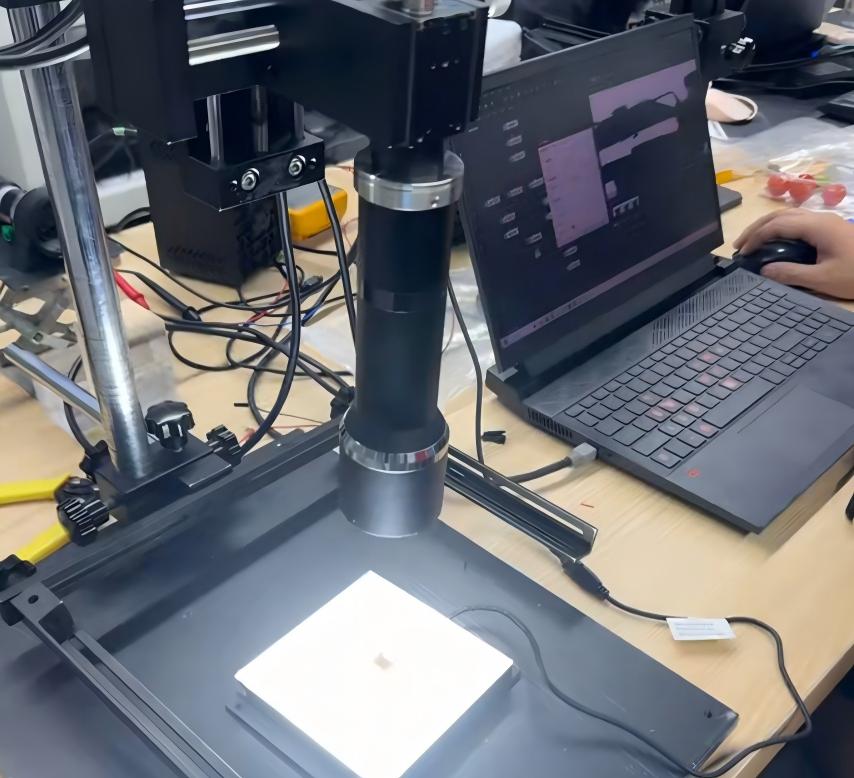
Selection and Usage Recommendations
To ensure optimal performance of telecentric lenses in practical applications, the following points are recommended:
Clearly define core requirements
Including field of view size, working distance limitations, detection accuracy (resolution/distortion), and working wavelength.
Match the camera sensor
Based on the lens datasheet, confirm the maximum object-side field of view corresponding to different sensor sizes (e.g., 1.5", 28.2 mm, 32.6 mm) to ensure complete coverage of the camera chip.
Interface and mounting accessories
Select the F or M42 version according to the camera interface, and use a standard mounting bracket to improve system stability.
Lighting and aperture matching
Optimize depth of field and brightness through a variable aperture, and further improve imaging consistency by combining it with a telecentric light source or parallel backlight.
Considerations for infrared applications
If working in the 800–900 nm band, adjust the working distance according to the notes and perform refocusing and calibration.
Overall, selecting a telecentric lens is not simply a matter of matching parameters, but requires comprehensive consideration of various factors, including the characteristics of the object being measured, detection accuracy requirements, camera parameters, system structure, and on-site optical and installation conditions. Zhixiang Shijue, when equipping customers with telecentric lenses, configures the system based on its working principles to build a stable and high-precision machine vision inspection solution. This allows the telecentric lens to fully utilize its advantages in precision measurement and consistency inspection. With the continuous improvement of accuracy and performance requirements in industrial inspection, telecentric lenses are gradually becoming the preferred choice for high-end machine vision systems.


